How Therapy Dogs Can Support Children
Connection, confidence and emotional regulation - with choice, consistency and welfare at the centre.
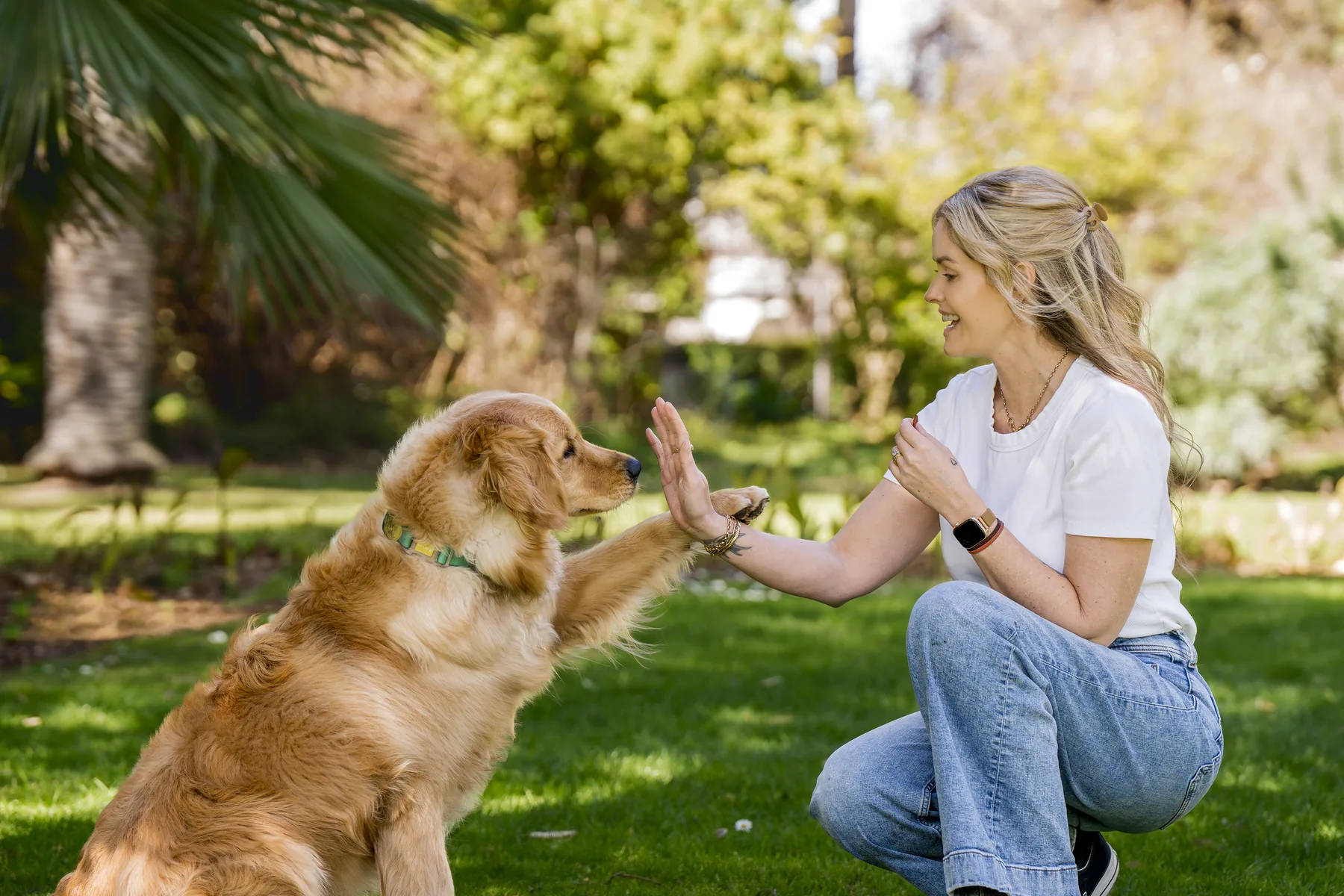
Connection does not always begin with a conversation.
For some children, it might begin with sitting quietly beside a dog, offering a treat, brushing soft fur or simply having Murphy nearby while they become comfortable in their own time.
Animal-assisted interactions can create a gentle, engaging environment where children have opportunities to practise social, emotional and communication skills without feeling put on the spot.
Kate facilitates the interaction, drawing on her mental health qualifications and specialist Animal-Assisted Interaction training, while Murphy provides a warm, responsive and non-judgemental presence.
When big feelings feel a little too big.
Children do not always have the words to explain what they are experiencing. Interaction with a calm dog can provide another point of focus and create opportunities to notice feelings, slow things down and practise strategies for managing emotions in a supportive environment.
A gentle bridge to connection
For children who are shy, hesitant with unfamiliar adults or reluctant to participate, Murphy can provide a natural shared focus. Rapport can develop gradually, without making the child the centre of attention from the first moment.
Some children need a gentler way in.
Animal-assisted interactions may be worth exploring for children who:
Are shy or slow to warm up
Murphy can provide a shared focus while familiarity develops at the child's pace.
Experience big feelings
Sessions can create opportunities to notice emotions, body cues and calming strategies without expecting feelings to disappear.
Find direct conversation difficult
Talking to, about or alongside Murphy can take some of the pressure off face-to-face interaction.
Are building confidence or social skills
Small interactions can support communication, turn-taking, boundaries, empathy and a sense of achievement.
Every child is different. Suitability is considered individually, and participation is always voluntary.
What can animal-assisted interactions support?
Emotional regulation
Recognising emotions, slowing down and developing awareness of body cues.
Confidence
Small, achievable interactions can provide experiences of competence and success.
Communication
Talking to, about or through Murphy can offer another way to practise expressing ideas, needs and feelings.
Social skills
Turn-taking, patience, cooperation, boundaries and noticing another individual's cues.
Engagement
For children who find traditional activities difficult to engage with, a dog can provide a meaningful reason to participate.
Empathy
Learning to recognise Murphy's preferences and body language can encourage perspective-taking and respect for boundaries.
Murphy isn't a reward.
Interaction with Murphy is not something a child has to earn through good behaviour, and participation is never forced simply because a therapy dog is present.
Children can observe from a distance, participate gradually or choose not to interact. Murphy gets choices too. Kate monitors his body language, comfort and engagement throughout every visit.
Respecting boundaries goes both ways - and sometimes that is part of the learning.
The Golden Bond approach
Kate is both a qualified mental health practitioner and Murphy's trained handler, with specialist Animal-Assisted Interaction training through Lead the Way Institute. This allows Golden Bond to use a Triangle model where appropriate, so an activity involving Murphy can have a purpose while remaining within Kate's qualifications and professional scope.
The dog creates the opportunity. The practitioner helps make the opportunity meaningful.
Same faces. Every visit.
For children who need time to develop familiarity and trust, consistency matters. Golden Bond does not operate with a rotating roster of handlers and dogs. It is Kate and Murphy, allowing relationships to develop gradually rather than asking a child to start again with someone new each time.
Every child is different, and animal-assisted interactions will not be appropriate for everyone. Visits are responsive rather than prescriptive, with choice and suitability considered throughout.
Related resources
Wondering whether this could suit your child or group?
You do not need to decide on a session type before getting in touch. Tell Kate a little about the child, setting and what you are hoping to support, and she can talk through suitability with you.